
3 Reasons Corporate Equity, Diversity, and Inclusion Programs Should Include LGBTQ+ History (Not Just Policy)
Corporate equity, diversity, and inclusion programs are under pressure. HR leaders and B/ERG sponsors are being asked to demonstrate measurable impact, manage political risk, and prove return on investment all while sustaining employee trust and engagement.
In that environment, many organizations default to the safest option: policy… Non-discrimination statements... Compliance training... Legal definitions... Reporting mechanisms…
Those tools matter, but they are not enough.
If your equity, diversity, and inclusion strategy focuses only on policy and procedure, it misses one of the most powerful drivers of inclusion available to organizations today: LGBTQ+ history. Not as nostalgia, not as a Pride Month add-on, but as a strategic asset that builds belonging, empathy, resilience, and performance.
Here are three reasons corporate equity, diversity, and inclusion programs that want real impact (not just box-checking) should integrate LGBTQ+ history into their inclusion strategy.
1. Policy Creates Compliance. History Creates Belonging.
Policies tell employees what is allowed. History helps them understand why it matters.
Most Fortune 500 companies now have some form of LGBTQ+ inclusive policy. Yet many LGBTQ+ employees and their allies still report feeling invisible, isolated, or cautious about being fully themselves at work. That gap exists because compliance does not automatically translate into culture.
History bridges that gap.
When employees encounter LGBTQ+ history, stories of people who navigated hostile workplaces, fought for recognition, built community, and contributed despite exclusion, it reframes inclusion as a shared human story rather than a corporate mandate.
For B/ERGs, this is critical. Employee Resource Groups thrive when members feel seen and when allies understand the deeper context behind advocacy. Historical storytelling:
Reinforces that LGBTQ+ inclusion did not appear overnight
Validates lived experiences across generations
Creates continuity between past struggles and present progress
Belonging is not created by rules alone. It is created when people recognize themselves—and each other—in the story of the organization.
2. Storytelling Builds Empathy, Resilience, and Innovation
Human beings are wired for stories. Long before policies existed, storytelling was how communities transmitted values, solved problems, and built trust. That hasn’t changed, especially at work.
Research consistently shows that inclusive cultures outperform their peers across nearly every metric that matters to business leaders: productivity, retention, collaboration, and innovation. What’s often missing is how inclusion actually takes root.
Storytelling is the mechanism.
LGBTQ+ history offers particularly powerful lessons for organizational culture:
Empathy: Learning about past discrimination, criminalization, or workplace exclusion fosters understanding that policy training alone rarely achieves.
Resilience: LGBTQ+ history is full of examples of adaptation, creativity, and perseverance under pressure—exactly the traits organizations say they want to cultivate.
Innovation: Diverse perspectives, shaped by historical marginalization, often lead to new ways of thinking and problem-solving.
In practical terms, historical exhibits and presentations function much like museums, nature trails, or heritage programs in other sectors: they turn abstract values into tangible experiences. Employees don’t just hear that inclusion matters—they feel why it matters.
That emotional engagement is what drives behavior change.
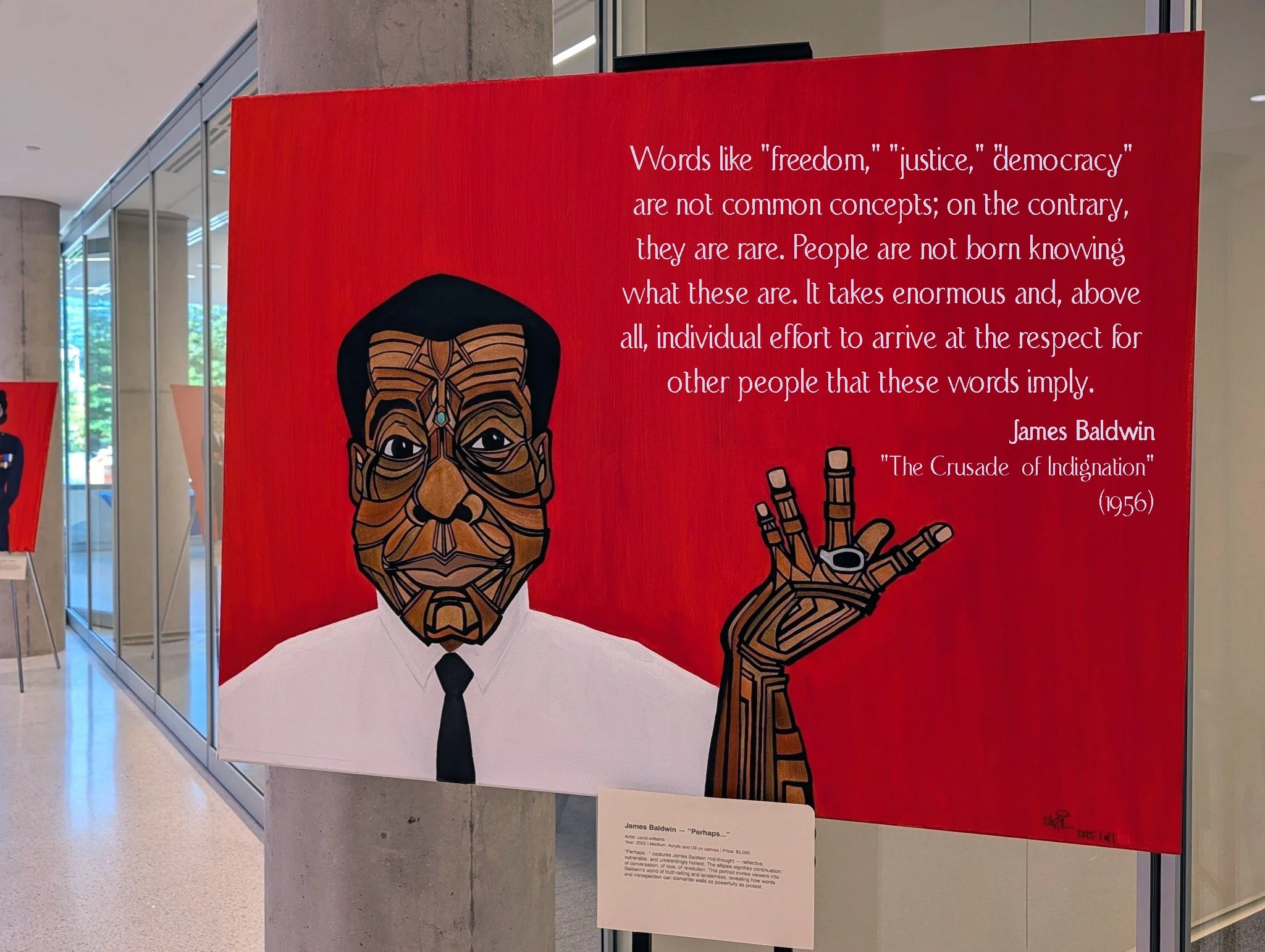
“James Baldwin: Perhaps...” (2025) by Camille Williams with a quotation from Baldwin superimposed.
3. LGBTQ+ History Strengthens the Business Case for Equity, Diversity, and Inclusion
Executives don’t just ask whether equity, diversity, and inclusion is “the right thing to do.” They ask whether it works.
The data is clear: inclusive organizations perform better. Employees who feel a strong sense of belonging demonstrate higher job performance, lower absenteeism, and significantly reduced turnover risk. Teams in inclusive environments collaborate more effectively and make better decisions faster. Organizations with inclusive cultures are more innovative, more attractive to top talent, and more likely to financially outperform their peers.
What LGBTQ+ history adds is credibility.
In a climate where equity, diversity, and inclusion initiatives are often caricatured as ideological or ungrounded, history provides evidence. It shows:
How exclusion has tangible economic and human costs
How progress was achieved through deliberate cultural change
How corporate action and inaction has shaped real lives
For employer branding, this matters. Today’s workforce (especially younger talent) expects organizations to demonstrate values, not just state them. Companies that can articulate why inclusion matters, grounded in history rather than slogans, stand out as authentic.
History also helps address internal skepticism. Rather than framing equity, diversity, and inclusion as “preference” or “politics,” historical context reframes it as risk management, cultural literacy, and long-term organizational health.
From Climate Assessment to Culture Change
B/ERG leaders might be familiar with tools like the Riddle Homophobia Scale, which maps attitudes from active hostility to genuine nurturing. One of the most valuable insights of that framework is this: progress is incremental.
Not every employee moves from resistance to celebration overnight, but it’s the movement that matters.
LGBTQ+ history supports that movement by:
Providing non-confrontational entry points for learning
Allowing employees to reflect without being put on the defensive
Creating shared reference points for discussion and growth
In some workplace cultures, shifting attitudes even one step, like from “repulsion” to “pity,” from silence to curiosity—is meaningful progress. History makes those shifts possible without shaming or coercion.
Practical Applications for B/ERGs and HR Teams
Integrating LGBTQ+ history into corporate equity, diversity, and inclusion does not require reinventing your program. Effective approaches include:
On-site or traveling exhibits that employees can engage with at their own pace
Facilitated presentations or workshops that connect history to current workplace realities
Panel discussions pairing historical context with employee lived experience
Pride Month programming that goes beyond celebration to education
These initiatives create inclusive spaces without positioning anyone as “the problem.” They invite participation, reflection, and dialogue—key ingredients for sustainable culture change.
Why History Is the Missing Piece
Policy sets the floor... History raises the ceiling.
Organizations that rely solely on rules and training often struggle with disengagement, backlash, or inclusion in words only. Organizations that incorporate LGBTQ+ history into their equity, diversity, and inclusion strategy build something more durable: a workforce that understands where inclusion came from, why it matters, and how each person fits into that ongoing story.
In a moment when equity, diversity, and inclusion’s future is being debated, history is not a liability. It is your strongest asset.
If your organization is ready to move beyond policy toward meaningful, measurable inclusion, contact us about corporate exhibit installations and presentations.
