About Expanding Horizons
Expanding Horizons offers LGBTQ+ history traveling exhibits, talks, and curricula that empower people to see their lives as chapters in a long, queer story that will never end.

“A community with no history has no use for a future. That silence is not self-imposed and it is not an accident. My mission is to share that our queer history as a community and as a nation is still VITAL.”
Vince, chief curator
Our Mission
To unleash human potential.
That purpose shapes what we research, what we build, and who we build it for. Communities that know their history have access to something essential: models of how people like them navigated difficult conditions, evidence that those conditions were made rather than fixed, and proof that change has happened before.
Three commitments run through everything we do: historical rigor, accessibility, and the conviction that education is most effective when it connects the past to questions communities are already asking.
Why LGBTQ+ History Matters
LGBTQ+ history has too often been compressed into a handful of familiar moments and well-known names. When history gets stripped of context—of the institutions, decisions, conflicts, and community responses that shaped it—it becomes trivia rather than knowledge.
Good historical interpretation does something different. It helps people understand how things came to be the way they are. Communities facing unfamiliar challenges can examine how earlier generations built infrastructure from scratch, navigated hostile institutions, and sustained themselves through difficulty. History gives those communities a vocabulary and a frame.
LGBTQ+ history is also a lens for understanding broader questions about institutions, culture, and social change. How communities organized in places the national media ignored. How public health institutions responded or failed to respond under pressure. How mutual aid networks filled the gaps left by formal systems. These are not niche topics. They are detailed records of how communities and institutions actually work, and they carry direct lessons for the present.
Our Approach
Expanding Horizons treats historical interpretation as a rigorous practice. That means grounding the work in evidence — archival materials, oral histories, institutional records, community documentation — rather than in received narratives or familiar story shapes.
It also means recognizing that history is not a fixed record. The categories people use to understand identity, community, and experience shift over time. Careful interpretation accounts for that shift, representing how people understood themselves in their own moment rather than projecting current frameworks backward onto different ones.
The aim is not the most emotionally satisfying version of events. It is an accurate one, designed to help audiences work with what that accuracy reveals. Every learning experience we build reflects this orientation: grounded in evidence, honest about complexity, and accessible to audiences without specialized historical background.
What We CREATE
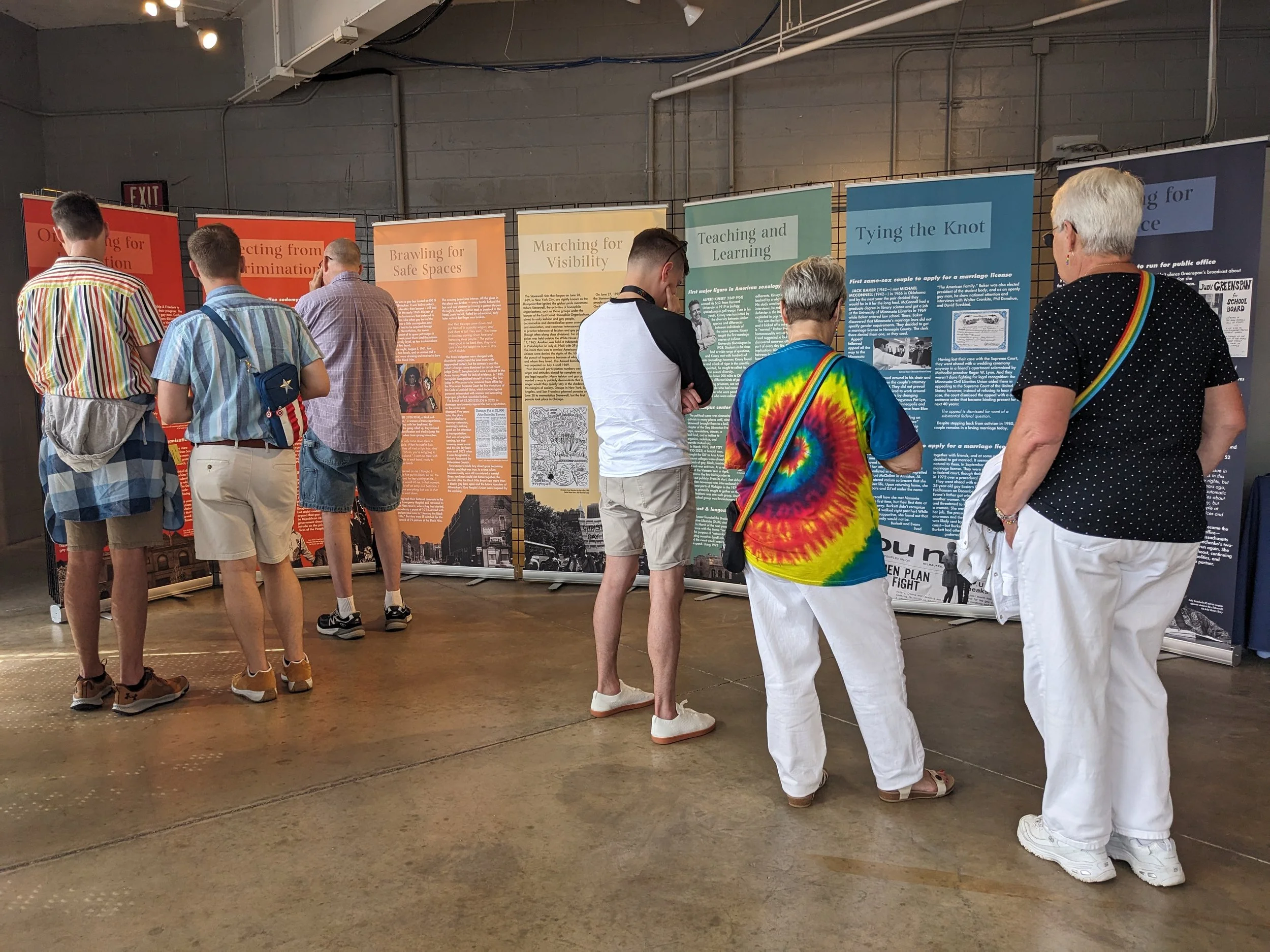
adaptable panel installations for libraries, campuses, cultural institutions, and community venues
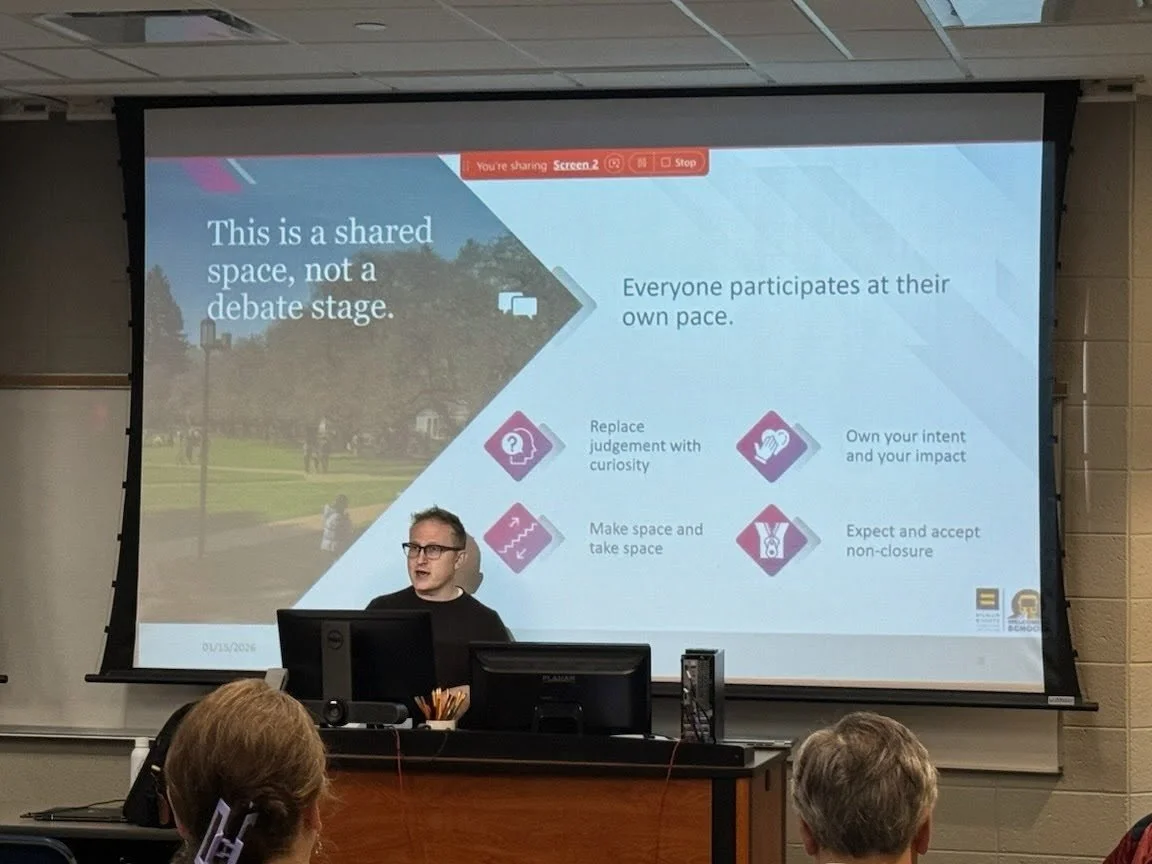
keynotes, facilitated workshops, and guided interpretation sessions for institutional and community audiences
research and programming developed around specific organizational or community histories
Why Organizations Choose Expanding Horizons
Organizations bring Expanding Horizons in because they need more than a display. They need educational programming that holds up: content that is sourced, interpreted, and designed with specific audiences in mind.
Every project begins with research and audience questions: What does this community already know? What context do they need to engage honestly with this material? What should participants be able to do with this history after encountering it?
The result is programming built for the people who will actually be in the room. That means it can function equally well in an academic seminar, workplace, and a community center, without requiring a simplified version for one or a jargon-heavy version for the other. The work is designed to meet audiences where they are, then take them somewhere useful.
Meet the Curator

Vince Tripi, III is a public historian and community educator with experience in instructional design, public programming, and LGBTQ+ historical interpretation. He develops learning experiences across libraries, universities, LGBTQ+ pride organizations, and community institutions, and keeps them grounded in archival research for the specific audiences who will encounter them.
His curatorial practice draws on museum studies, interpretive frameworks, and sustained community engagement. He also serves as Director of Education & Outreach for Milwaukee Pride, Inc.
Trusted By
Our Blog