
There is a question that runs beneath the entire history of LGBTQ+ rights, surfacing in every era and every geography where that history has been made or suppressed: who gets to define what a human being is?
And it’s not a rhetorical question—it is an underlayment of human societies across all time and everywhere around the globe. It might surprise you how the answers have dramatically diverged and all together they form a kind of natural experiment. So, what happens to people designated as some kind of queer when the surrounding culture creates conditions for their lives to be visible, organized, and scientifically understood? What happens when those conditions are deliberately destroyed?
Expanding Horizons’ Blossom & Wilt exhibit is built around exactly that experiment. Its subject is not just LGBTQ+ history. It is the relationship between culture and human flourishing as well as what the historical record reveals about what becomes possible, and what gets lost, when that relationship changes.
The Question That Preceded the Answer
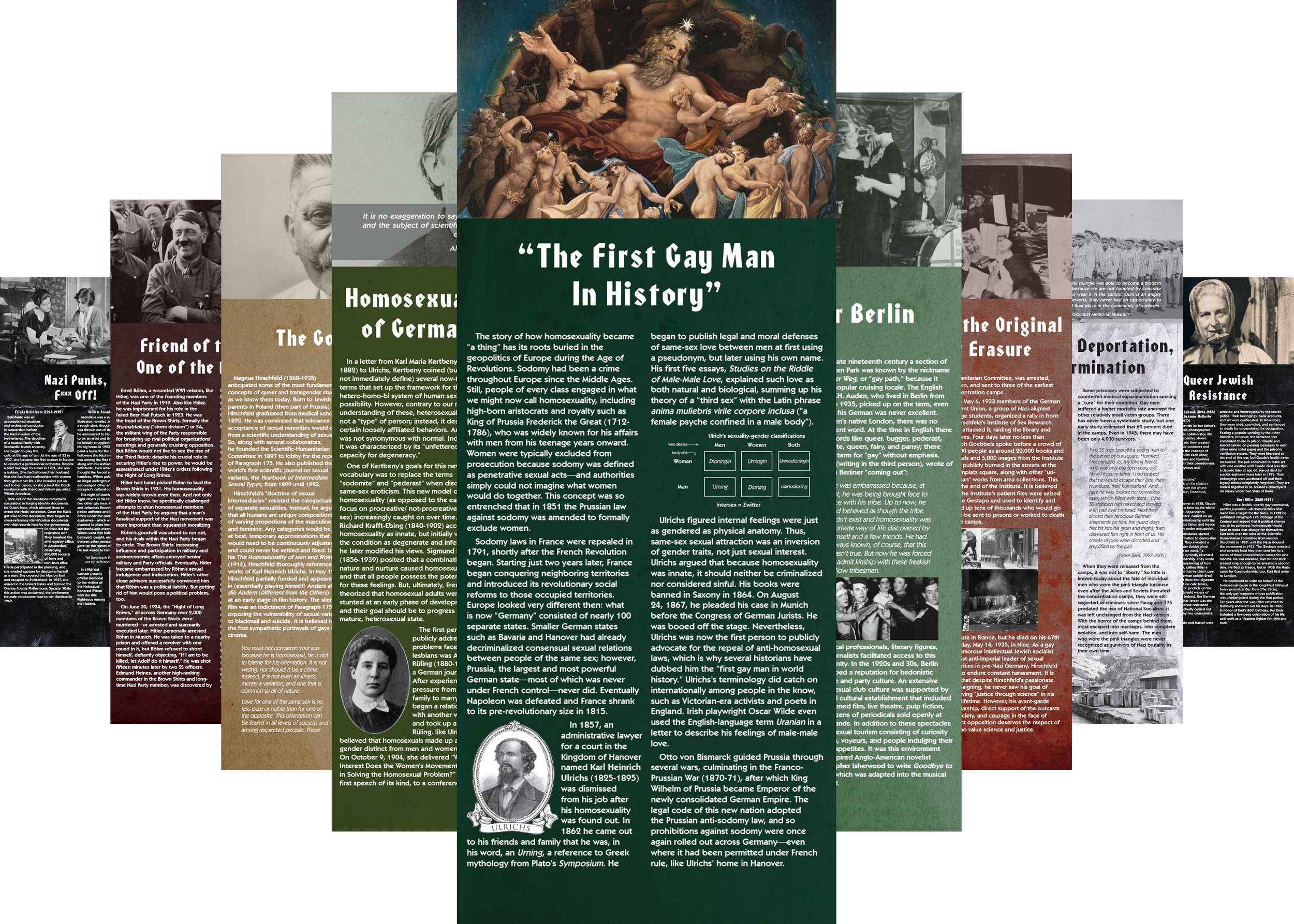
Before the Weimar era in Berlin, before the modern concept of “homosexuality” as an identity, a German lawyer named Karl Heinrich Ulrichs stood before the Congress of German Jurists in Munich in 1867 and argued publicly for the decriminalization of same-sex love. He was shouted down. He had already been publicly outing himself in print for years, and coin a term for his identity, “Uranian,” because no adequate language yet existed. He put himself out there, without a safety net of any kind, trying to create space for himself and other Uranians like him.
What Ulrichs established, at enormous personal cost, was that same-sex desire was a natural variation of human experience, not a moral failure. Magnus Hirschfeld, a Jewish-German physician and sexologist, took that premise and built an institution around it.
Hirschfeld’s Institute for Sexual Science
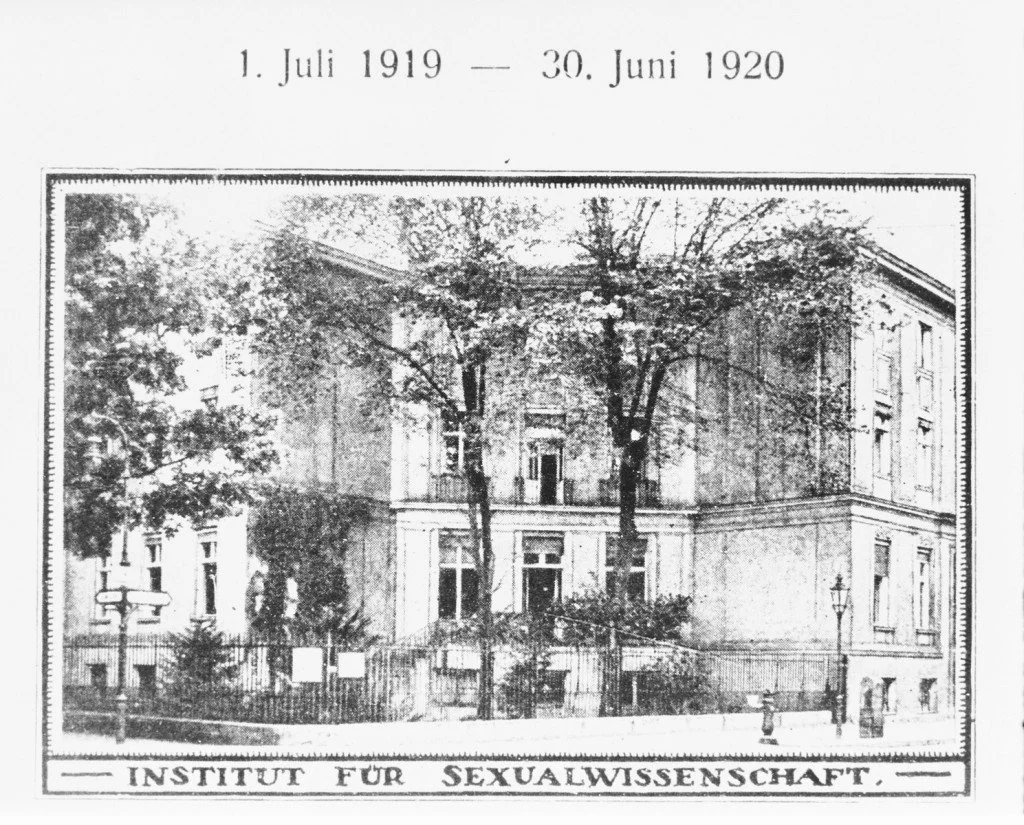
Hirschfeld’s Institut für Sexualwissenschaft (Institute for Sexual Science), founded in Berlin in 1919, was a remarkable convergence: medicine, anthropology, sexology, law, advocacy, and politics occupying the same address. His personal motto, Per scientiam ad justitiam, “through science to justice,” captured his conviction that rigorous inquiry was itself a political act. But Hirschfeld was not simply studying German bourgeois homosexuality. He researched the full anthropological range of human gender and sexuality across cultures and centuries: the third gender people like the Hijra of South Asia, people who now call themselves Two-Spirit among Indigenous North American nations, the Mapuche of South America, and dozens of other traditions in which gender-expansive and same-sex-loving people had occupied recognized, often honored roles long before Western binary frameworks arrived to replace them.
The scientific argument Hirschfeld was building was not merely that homosexuality exists. It was that the cultural suppression of human variance is the anomaly and that the evidence for this was global, historical, and overwhelming.
The Blossoming in Weimar Berlin
The culture that Hirschfeld’s work both reflected and helped create in Weimar-era Germany was, by the standards of its time, extraordinary. Berlin alone supported more than forty bars, clubs, cafes, and dance halls catering to gay, lesbian, and transgender communities. A vibrant press had emerged, including magazines like Die Freundin and Der Eigene, discussing same-sex relationships, politics, and identity with a directness that had no parallel elsewhere in the world. The Scientific-Humanitarian Committee, which Hirschfeld had co-founded in 1897, was the world’s first homosexual rights organization, actively lobbying to overturn Paragraph 175, the law criminalizing same-sex acts between men.
At the Institute, some of the first documented gender-affirming surgeries were performed. Legal documentation was provided to allow transgender individuals to move through the world in accordance with their gender identity. Counseling, research, education, and advocacy occupied the same space, in the service of a single animating conviction: that knowledge and love, as the film Different from the Others put it, would ultimately prevail.
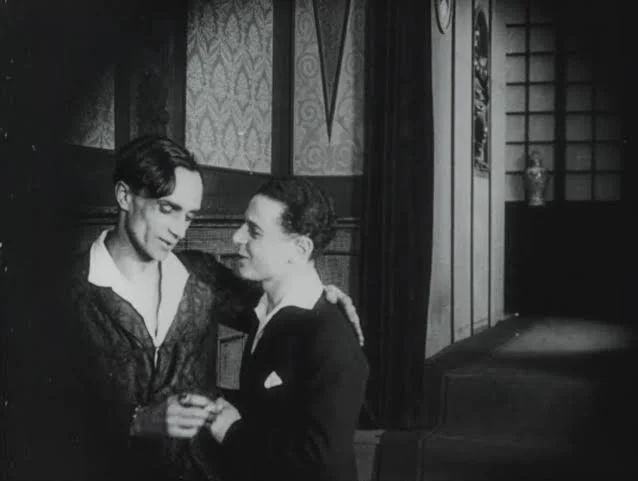
Scene from Different from the Others (1919)
This blossoming went beyond mere tolerance of same-sex love and gender self-determination. It involved the creation of institutions, language, science, and culture that made queer lives visible and intelligible to their own community and to the broader world. It was, by any measure, one of the most remarkable explosions of queer public life in recorded history.
Destruction as Policy
The rise of Nazism brought that development to a devastating halt. But, truly, the word “halt” understates what actually happened: The Nazi regime did not simply persecute queer people, they pursued a sophisticated campaign to destroy the knowledge system that had made queer lives legible.
On May 6, 1933, a Nazi student organization stormed the Institute for Sexual Science. They seized the library and archives — tens of thousands of books, research files, photographs, and records — and carried them into the street. Four days later, they burned them. Hirschfeld, who was abroad at the time, never returned to Germany. He died in exile in 1935.
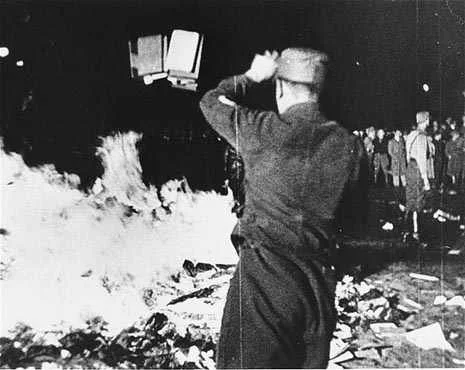
Pro-Nazi university students and SA members gathered at Berlin’s Opernplatz to publicly burn more than 20,000 books deemed "un-German," including Hirschfeld’s entire research library and archives.
The Nazis were, among other things, horrified of what Hirschfeld’s work represented: a scientific demonstration that their definition of the human was too narrow to hold. Their response was to eliminate the evidence. Thousands of men were sentenced to concentration camps under Paragraph 175. The pink triangle, assigned to identify them, became the mark of a category of person the regime had decided did not deserve to exist.
The Wilt That Outlasted the War
Here is the part of the story that most historical accounts omit: liberation of the camps and the end of Nazi rule in 1945 did not end the wilt.
Men who had survived the camps under the pink triangle were not recognized as victims of Nazi persecution in postwar Germany. Paragraph 175, the law under which they had been imprisoned, remained on the books in West Germany until 1969 (the same year as the Stonewall riots). Their time served in the concentration camps? That was regarded as illegitimate imprisonment, so some were re-imprisoned under the same law after liberation. Survivors we barred from reparations payable to victims of Nazi repression. The research, the networks, the vocabulary, the community infrastructure—cultural and institutional knowledge that Hirschfeld’s Institute had gathered and synthesized—were ashes. The queer culture from before the War did not rebound.
This is what wilt looks like when it is thorough: not just the persecution of people, but the destruction of the epistemic and cultural infrastructure that had made their humanity visible. The world that emerged from World War II did not inherit Hirschfeld’s science. Instead, it inherited a medicalized, pathologized framework that had always been his opposition that shaped what was clinically, legally, and culturally possible for (at least) the next three decades.
Stonewall, Reconsidered
In the American narrative, the Stonewall uprising of 1969 looks like a beginning, a spontaneous eruption, the singular moment when the modern LGBTQ+ rights movement was born.
But from outside that narrative there is a longer arc of European sexological history, of Weimar Berlin, of the pink triangle’s long wilt. The tradition of creating categories and language that Ulrichs and Hirschfeld built into an institution, that the Nazis burned and the postwar world refused to acknowledge, had not died. It had been suppressed, for thirty years, by the combined force of fascist persecution and postwar cultural revisionism, often misnamed “conservatism.” Stonewall was the moment it came roaring back in a different city, in a different language, among people who mostly did not know what had been lost, and who rebuilt it anyway.
That part of the argument at the heart of Blossom & Wilt, that culture shapes what we think of as human life (including LGBTQ+ lives), and determines whether the intellectual infrastructure for those lives, the institutions, the science, the language, the community, can exist at all. When that infrastructure is destroyed, the loss is generational.
Going Deeper
Expanding Horizons offers a variety of guest lecture programs to accompany the exhibit:
Before Stonewall: Berlin’s Queer History the Nazis Tried to Erase
The Science of Being Human: Magnus Hirschfeld and the Quest for Justice, and
After Liberation: The Unfinished Story of the Pink Triangle
Each educational program is specially designed to extend the exhibit’s themes and lessons into classroom, conference, community, and campus programming. Together, they offer what few exhibit partnerships can: a complete educational arc, from historical foundation through contemporary implication.
Bring Blossom & Wilt to your campus or community center. Contact founder and chief curator Vince for a discovery call or explore the full exhibit catalog on our website.
The question of who gets to define what a human being is has never stopped being asked. History is one of the few tools we have for answering it honestly.
