
Barbara Gittings: The Woman Who Changed How Libraries Talk About Being Gay
Long before LGBTQ+ books were displayed during Pride Month—or even cataloged honestly—libraries were among the institutions that quietly reinforced the idea that being gay was shameful, dangerous, or pathological. Titles about homosexuality, when they existed at all, were often classified under mental illness or criminal behavior. For many readers, the message was unmistakable: you do not belong here.
Barbara Gittings changed that.
Through persistence, strategy, and an unshakable belief in the power of libraries as civic institutions, Gittings helped transform how libraries talked about being gay—and, in doing so, reshaped how generations of people understood themselves.
From Isolation to Activism
Barbara Gittings came of age in the 1950s, a time when being openly gay could cost you your job, your housing, or your freedom. Like many LGBTQ+ people of her generation, she turned to books in search of understanding—and found mostly condemnation.
Libraries offered information, but rarely affirmation. What Gittings encountered instead were medicalized texts that described homosexuality as a disorder to be treated or cured. Rather than internalizing that message, she began asking a radical question: Who decides how knowledge is organized—and to what end?
That question would guide her life’s work.
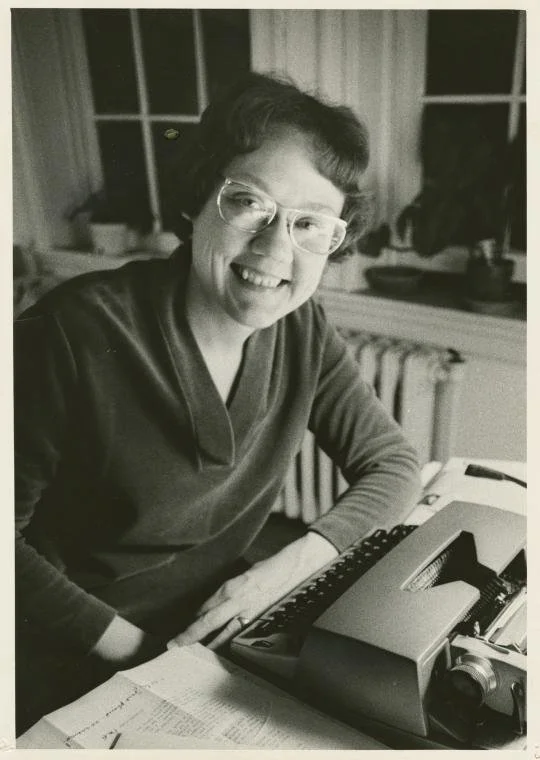
Barbara Gittings at her typewriter, 1971, by Kay Tobin. New York Public Library Digital Collections.
The Power of the Card Catalog
Gittings understood something that many activists initially overlooked: classification systems are not neutral. How books are cataloged shapes how readers interpret reality. If queer lives were filed under pathology, then queerness itself would always appear broken.
Working alongside her partner, photographer and activist Kay Tobin Lahusen, Gittings began challenging libraries—and professional organizations like the American Library Association (ALA)—to confront their role in perpetuating stigma.
In the late 1960s and early 1970s, this was controversial terrain. Libraries prided themselves on neutrality. Gittings countered that neutrality was already a position—and it was harming people.
Libraries as Battlegrounds for Civil Rights
Gittings’ advocacy reached a turning point in 1971, when she helped organize the ALA’s first-ever discussion of homosexuality. That effort grew into the formation of what is now the Rainbow Round Table, one of the oldest LGBTQ+ professional groups within the ALA.
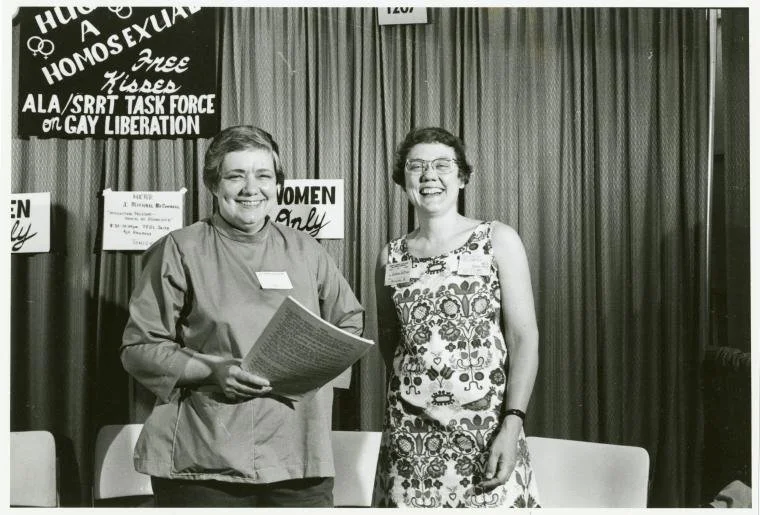
Isabel Miler & Barbara Gittings at the "Hug a Homosexual" booth at the 1971 American Library Association Convention. New York Public Library Digital Collections.
Her goals were practical and visionary at the same time:
Remove homosexuality from pathological subject headings
Increase access to accurate, affirming LGBTQ+ materials
Encourage librarians to see queer readers as part of their public—not an exception to it
These changes may seem technical, even mundane. But their impact was profound. When libraries stopped treating queerness as a disorder, they made space for LGBTQ+ people to encounter themselves without shame.
For many patrons—especially young people—this was the first time an institution told them, implicitly, you are not sick; you are human.
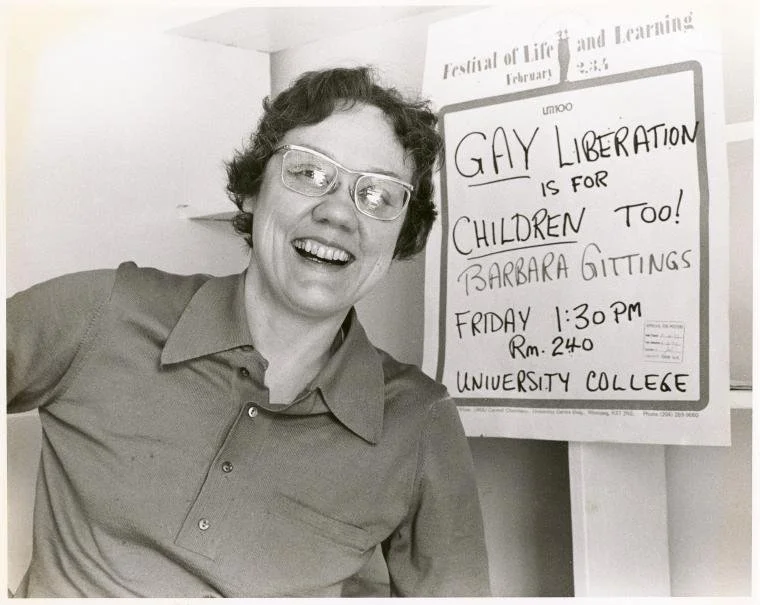
Visibility as Strategy
Barbara Gittings did not believe in quiet acceptance. She believed in visibility.
With Kay Lahusen behind the camera, Gittings helped shape some of the most recognizable images of early LGBTQ+ activism. Lahusen’s photographs documented picket lines, protests, and everyday acts of resistance—creating a visual archive of a movement that mainstream media often ignored.
Together, they understood that libraries were not just repositories of information. They were gateways to legitimacy. If queer lives were documented, preserved, and made accessible, they could not be dismissed as fringe or fleeting.
Today, the Barbara Gittings and Kay Tobin Lahusen Papers at the New York Public Library stand as a testament to that belief. Their collection includes photographs, correspondence, and ephemera that help historians—and the public—trace the evolution of modern LGBTQ+ civil rights.
Changing the Narrative, One Institution at a Time
What makes Gittings’ legacy especially relevant today is her strategic patience. She did not demand that libraries become activist organizations. She demanded that they live up to their own stated values: access, accuracy, and intellectual freedom.
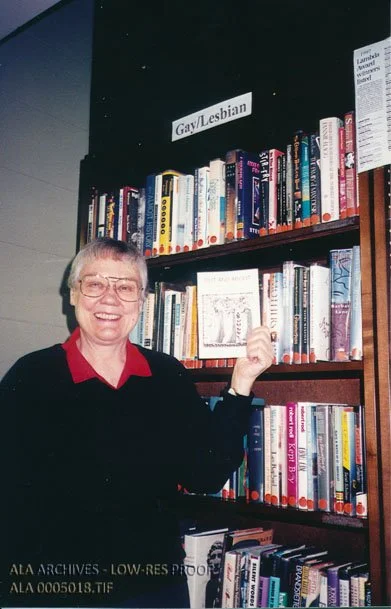
Barbara Gittings at the Free Library of Philadelphia, 1999. American Library Association Archives.
By framing LGBTQ+ inclusion as a professional and ethical obligation, she made it harder for institutions to dismiss her work as partisan or radical—even though it was deeply transformative.
Libraries began to change not because they were forced to, but because they were persuaded.
Why Barbara Gittings Still Matters
In an era of renewed book bans and political pressure on libraries, Barbara Gittings’ work feels less like history and more like instruction.
She reminds us that:
Representation is structural because it lives in catalogs, collections, and policies.
Who gets to find themselves in a library matters, and makes access a civil rights issue.
Libraries shape the civic imagination: They teach us who belongs in the story.
For LGBTQ+ youth especially, the changes Gittings fought for can mean the difference between isolation and recognition. A book found at the right moment can save a life—not metaphorically, but literally.
A Model for Library Advocacy Today
Barbara Gittings offers today’s librarians a powerful model: principled, informed, and unapologetically humane. She did not ask libraries to abandon neutrality. She asked them to abandon false neutrality that disguised harm.
Her legacy challenges us to keep asking difficult questions:
How are LGBTQ+ materials classified today?
Whose histories are still missing from our shelves?
What does intellectual freedom look like in practice—not just policy?
These are not abstract concerns. They are daily decisions made in libraries across the country.
Carrying the Work Forward
At Expanding Horizons, our educational programs and exhibits build on the foundation Barbara Gittings helped lay. By bringing LGBTQ+ history into libraries, classrooms, and civic spaces, we continue the work of expanding who is seen, remembered, and valued.
Libraries changed because people like Barbara Gittings insisted they could—and should.
Learn about our educational programs at ExpandingHorizons.LGBT/speeches and explore how history can continue to open doors, shift narratives, and affirm belonging—one institution at a time.
