Decolonizing Queerness
Precolonial indigenous genders and sexualities around the world; Homophobia as a Legacy of Colonialism

Need to localize or customize this exhibit for your community? Explore our custom services.Number of banners
Eleven
Estimated space
33 linear feet
187 square feet
Debut
2023
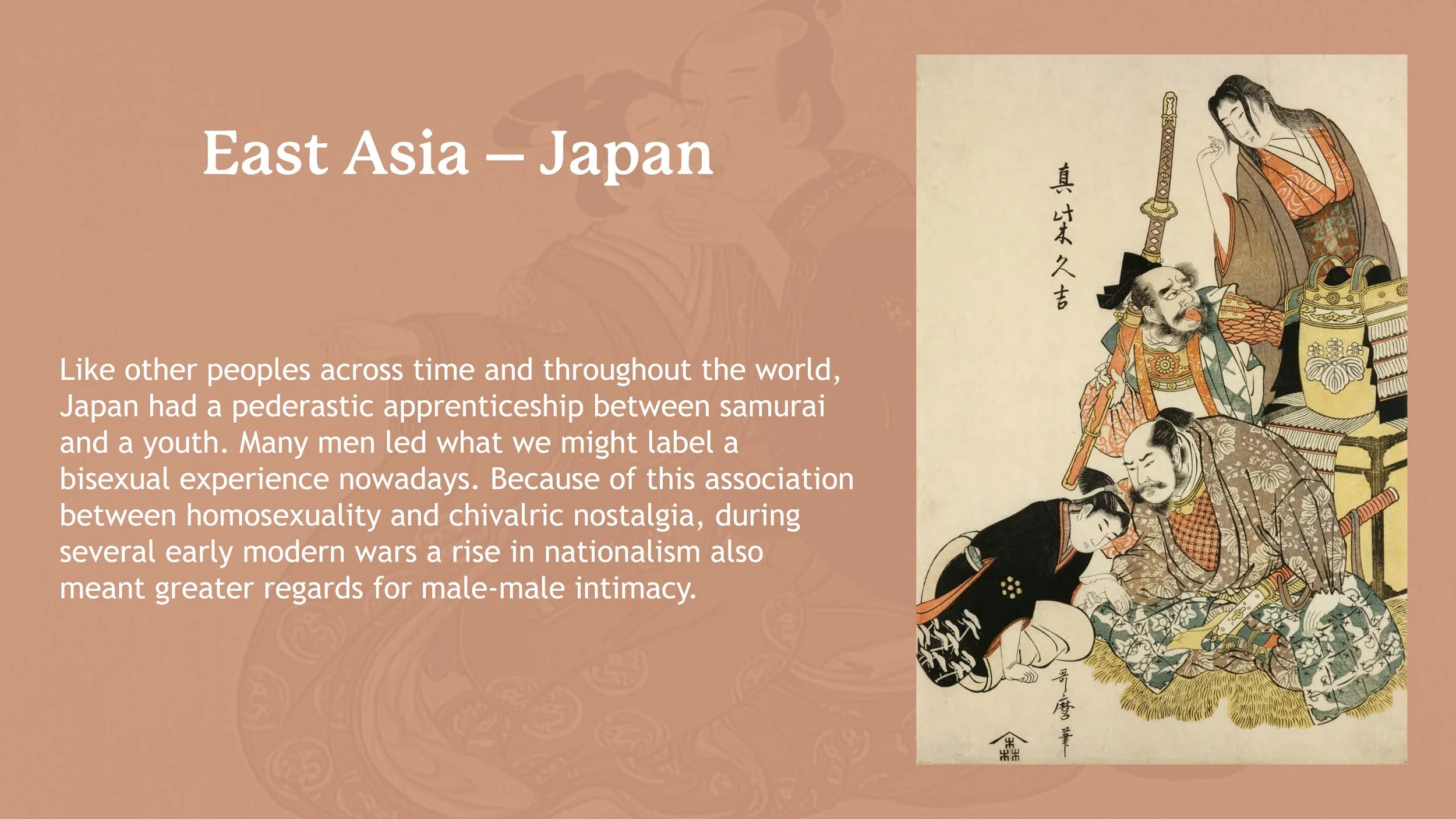
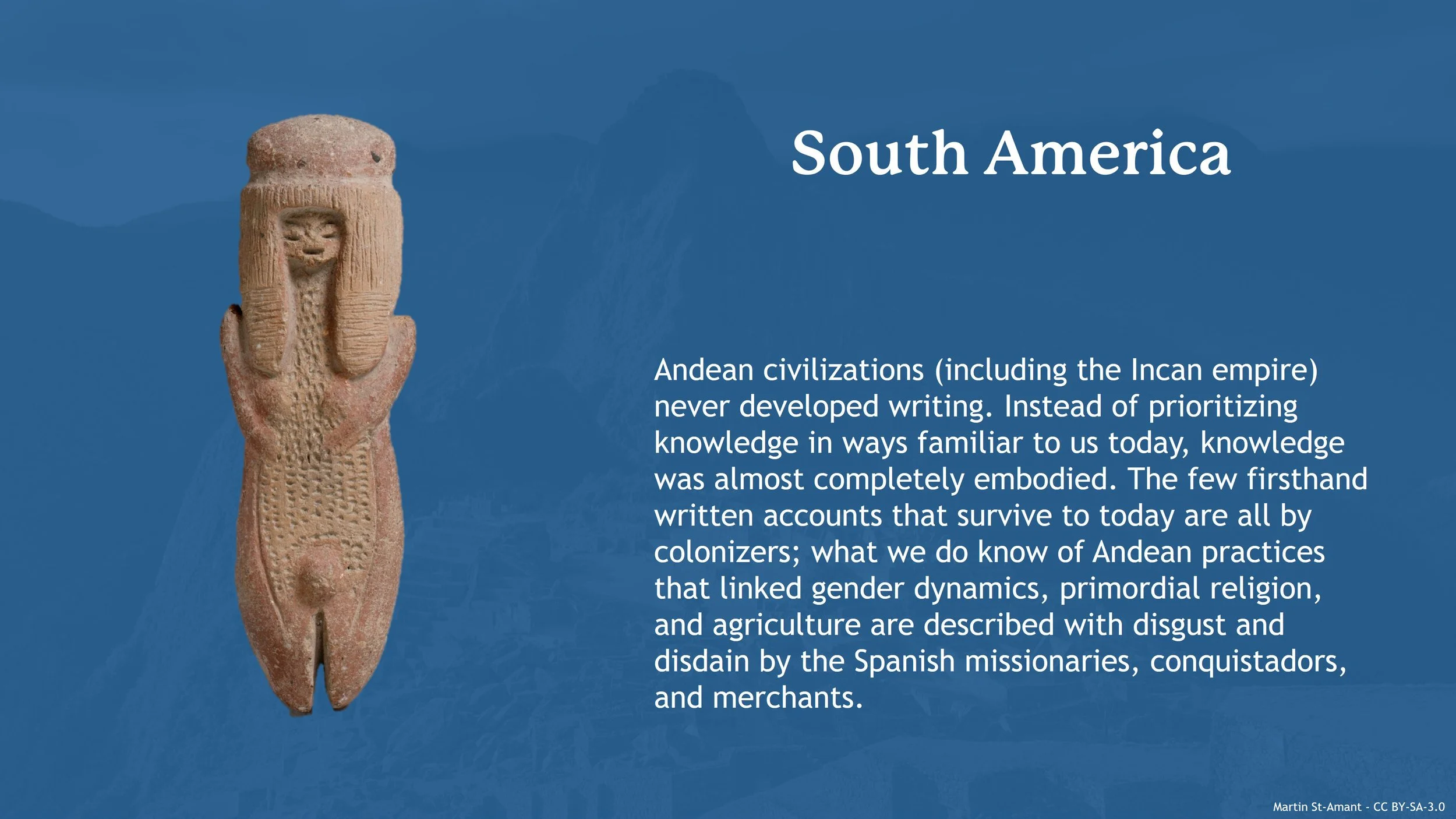
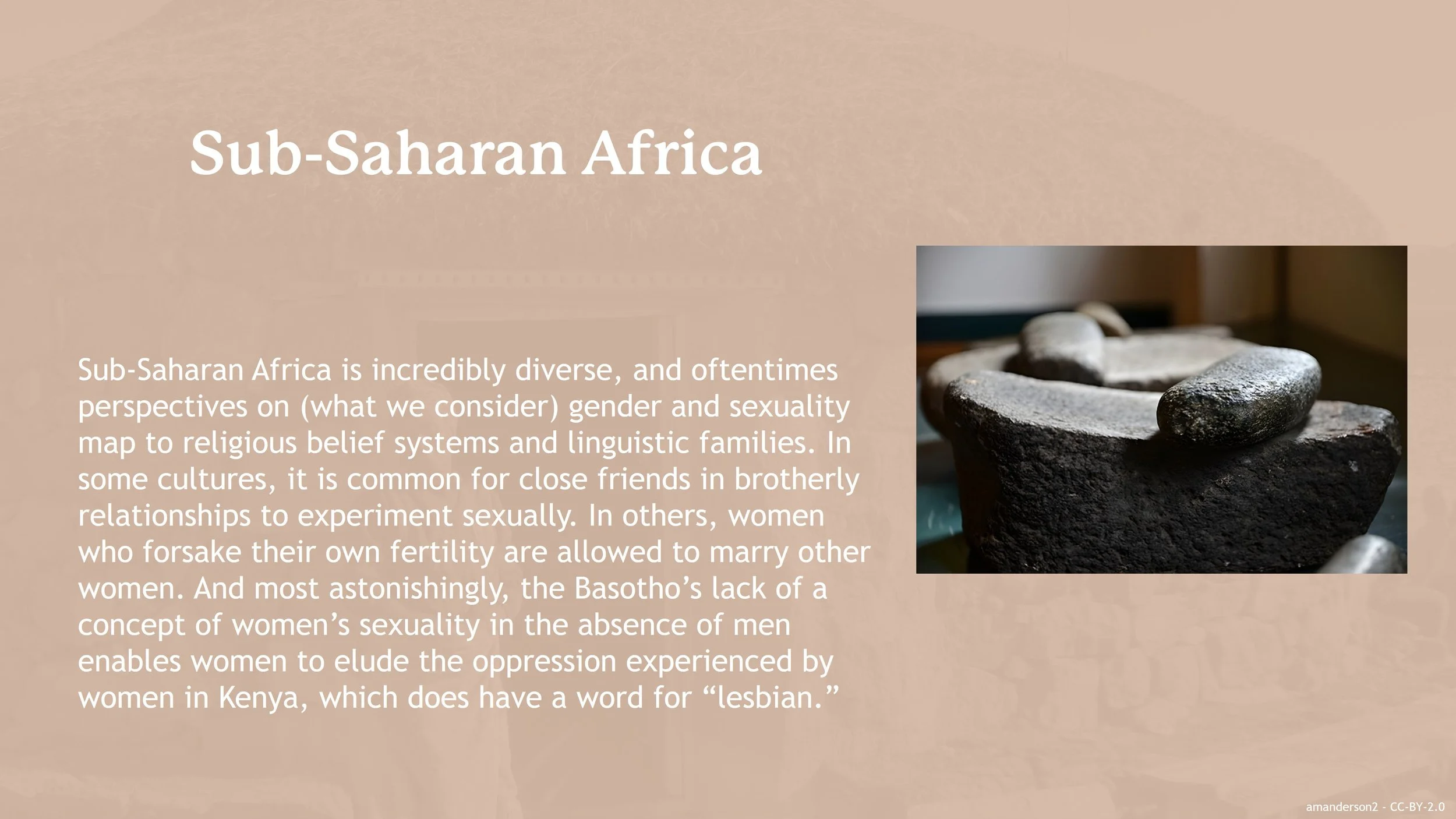
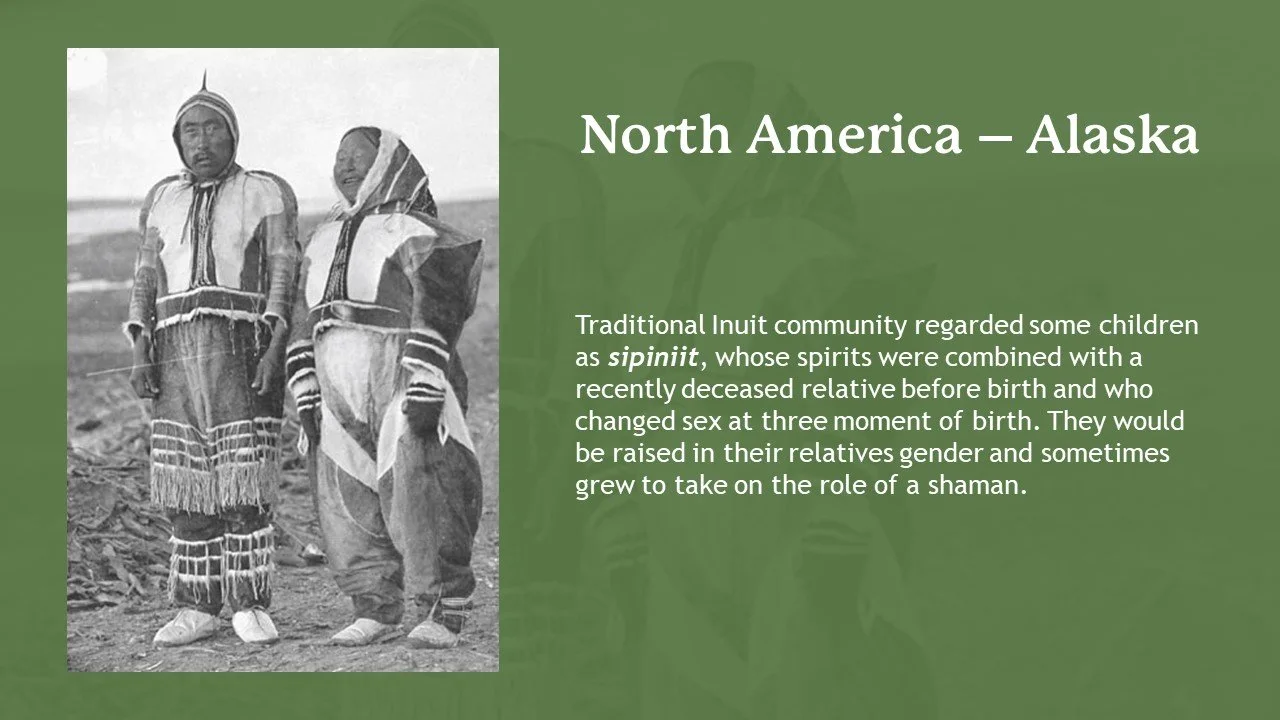
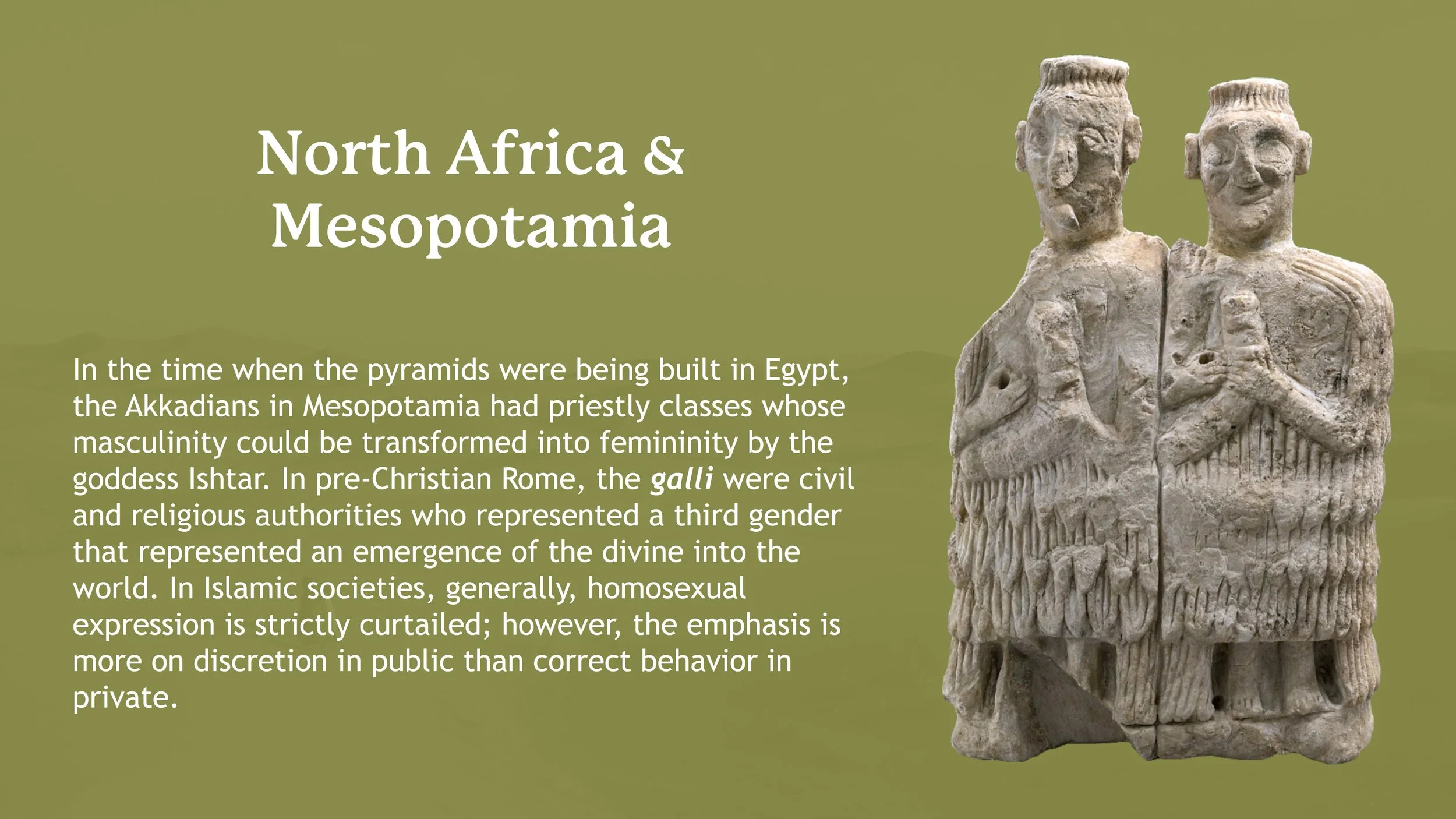
This exhibit explores a slice of the myriad approaches taken to gender and sexuality by cultures and communities around the world. Not only do “non-Western” peoples have different ideas about men and women, several perceive more than two sexes. Rather than judging third gender persons to be horrible or pitiful mistakes, they are seen as being charged with holy purpose and extraordinary abilities. Same-sex erotic behavior can range from no big deal to a typical part of adolescence or of military life to culture-defining inspirational love story. By learning about the sexual diversity of pre-colonial indigenous civilizations, the unspoken assumptions at the root of Western civilization are uncovered.
For those in the West, it is tempting to naturalize and universalize our ways of thinking and being. We often assume that the way things are now is how they’ve always been and the way things are here is how they are everywhere—or, things are better here and now compared with elsewhere and in the past. European colonial powers imposed their attitudes toward gender diverse individuals and same-sex eroticism on the peoples they conquered and exploited across the globe, substituting their “civilized” Christian morality for indigenous knowledge.
Most cultures across time lack so much as a concept of “gender identity” or “sexual orientation,” so it is not useful to try to wedge the incredible diversity of categories that aboriginal peoples use to identify social roles or characterize behavior we might label “sexual” into our contemporary LGBTQ framework. Every group, even in the West, has multiple accounts of what kinds of humans exist, how they came to be, what they exist for, and why it matters. It is also impossible (and inappropriate) to claim the mantle of an identity from a culture outside your own. However, the existence of those identities and ways of being can inspire us to break down the myths of imperialism and claim new space in our own cultures.

Testimonial
“Rotating the Decolonizing Queerness exhibit over the academic year presented us with unique opportunities for passive and active programming and partnership. Collaborating with multicultural units, academic departments, libraries, and student organizations during heritage & history months and observances; i.e., Latinx Heritage Month, LGBTQ+ History Month, Native November, Black History Month, Middle Eastern & North African (MENA) Heritage Month, Trans Day of Visibility, and Asian Pacific Islander and Desi American (APIDA) Heritage Month. By hosting the exhibit in the Center, we witnessed increased traffic from students and community members alike. I believe Decolonizing Queerness inspired students toward research of their own.”
Warren S, MPH, Assistant Dean of Students & Director, UW-Madison Gender and Sexuality Campus Center
How to Host a Traveling LGBTQ+ History Exhibit
The overview of request and booking process for Expanding Horizons LGBTQ+ traveling exhibitions as follows:
Exhibits rentals occur on a rolling basis.
Submit your request using the online Contact form.
Bookings are confirmed when host venues return signed booking agreements and secure the rental with a 50% deposit.
We use a sliding scale based on organization type and size in order to support access.
Expanding Horizons is a social enterprise, which means accessibility is a principally important part of our mission.
For more information about travel exhibition rentals, view our FAQs page.
Preview the exhibit





Printables
Provide your students, patrons, or guests with a memento from their visit.
With your rental we can co-brand these for you to print for that personal touch.