
The Lavender Scare: When the U.S. Government Hunted Gay Employees
Most Americans have heard of McCarthyism; the Red Scare is (was?) a typical middle and high school history class topic. However, fewer know that running alongside it, and in many ways overshadowing it in terms of documented casualties, was a parallel campaign of government persecution with a different target: gay and lesbian federal employees.
It was called the Lavender Scare, and it was official policy.
The Machinery of Persecution
On April 27, 1953, President Dwight D. Eisenhower signed Executive Order 10450, which formalized the exclusion of “sexual perverts” from federal employment. The order expanded and systematized what had already been underway since the late 1940s, when a State Department official testified before Congress that the department had dismissed 91 employees for homosexuality and triggered a moral panic that would reshape the federal workforce for decades.
The logic was simple and entirely circular: gay and lesbian employees were security risks because their sexuality could be used to blackmail them. They were vulnerable to blackmail specifically because the government had made their sexuality a fireable offense. The system manufactured the threat it claimed to be protecting against.
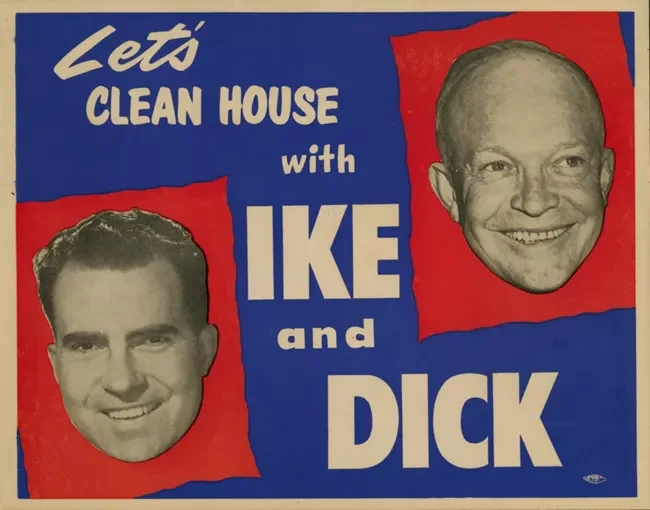
What followed was institutional in scale: the State Department, the military, the civil service each established mechanisms for identifying, investigating, and purging gay and lesbian employees. Informants were recruited. Interrogations were conducted. Careers were ended on the basis of rumor, association, or the refusal to name names. Historian David K. Johnson, whose book The Lavender Scare remains the definitive account, estimates that gay and lesbian employees were fired from the federal government at a rate that exceeded dismissals for alleged communist sympathies.
They were astronomers, translators, clerks, diplomats, and analysts — people who had dedicated their working lives to public service and were removed from it because of who they were.
The Paradox at the Center
No figure embodies the Lavender Scare’s internal contradictions more completely than Roy Cohn.
Cohn served as chief counsel to Senator Joseph McCarthy (R–WI) and was among the most aggressive architects of the Red Scare investigations. He was also, by all credible accounts, a gay man, something he denied with vehemence until his death from AIDS-related complications in 1986, while publicly attributing his illness to liver cancer.
Cohn was not simply a hypocrite; he was the product of a system that made being openly gay an existential threat. He chose survival through devastation, building his safety on the ruins of others’ careers and lives. The Lavender Scare created the precise conditions that made a Roy Cohn possible: a world in which the surest protection from persecution was to become its instrument.
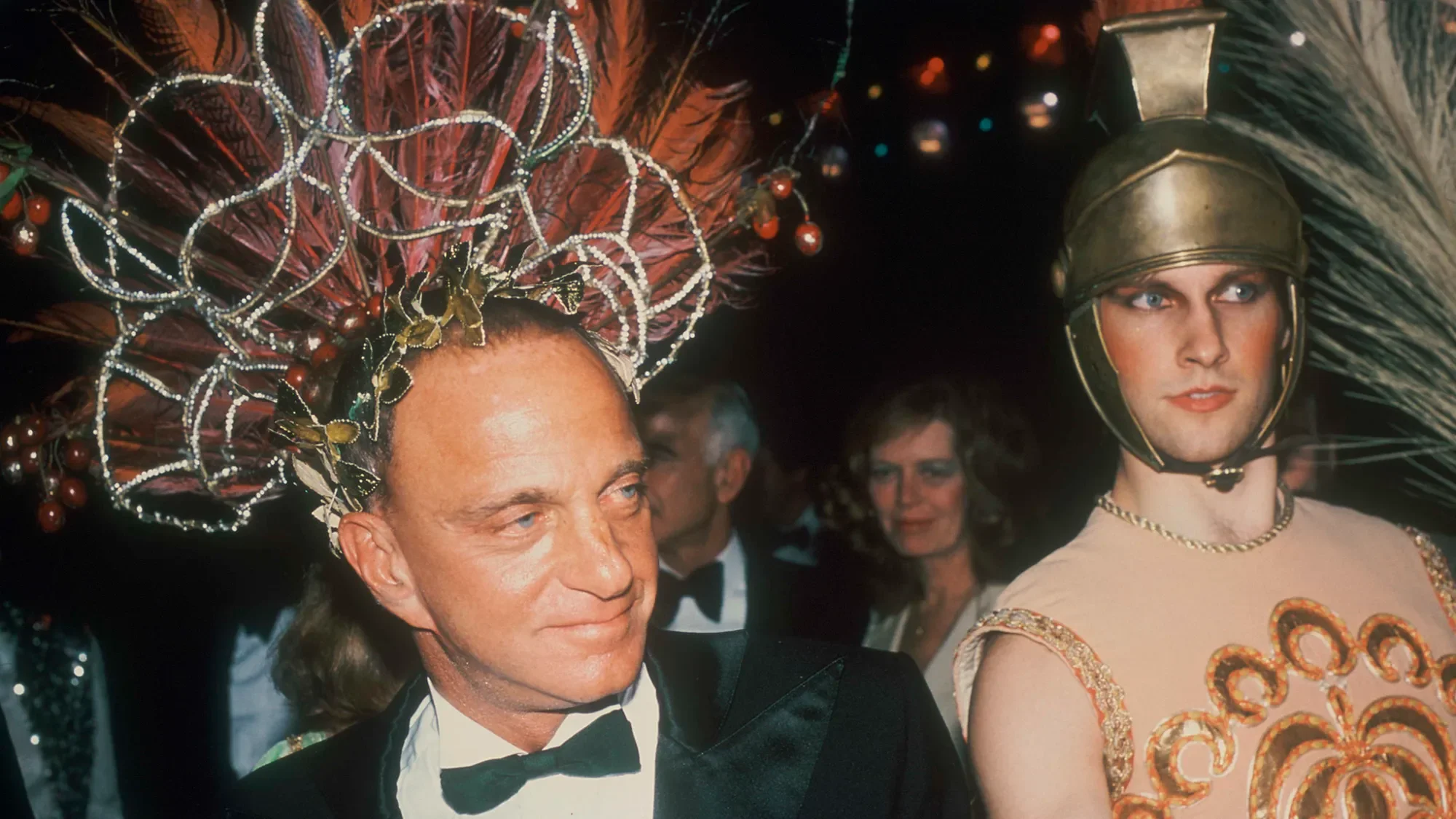
The harm Cohn caused was real and specific and fell on real people who deserved better. But moral condemnation — satisfying as it may feel — misses the more important lesson: The system did not need Roy Cohn to be evil. It needed him to be afraid and ambitious, and it supplied both the fear and the opportunity. It will always find someone willing to fill that role, as long as the system remains intact.
Arguments That Never Change
Frank Kameny was an astronomer fired by the Army Map Service in 1957 who became one of the foundational figures of the modern gay rights movement. Historian Eric Cervini, whose book The Deviant’s War chronicles his life, offered an observation that deserves to be read slowly.
There is not a single argument being made by the right, right now, in any of these states that hasn’t been made before by bigots and politicians trying to stoke paranoia, making the exact same argumentation that our children are at risk because of “sexual perverts.”
The language of the 1950s Lavender Scare is a template that has been reused (with modest updates to the vocabulary) in every subsequent generation of anti-LGBTQ+ political campaigns. It’s not some historical artifact. The names change, but the strategy — predators, perverts, threats to children, corrupting influences in schools and government — remains functionally identical. The arguments recycle because they were never really about evidence; they are about manufacturing enough fear to justify exclusion. And eventually, destruction.
Kameny, for his part, did not accept the logic. Fired in 1957, he challenged his dismissal all the way to the Supreme Court — and lost. He then spent the next several decades fighting back through the homophile movement, pushing the American Psychiatric Association to declassify homosexuality as a mental disorder, and helping build the organizational infrastructure of the modern LGBTQ+ rights movement. He was one of the people Cervini calls ordinary: someone who, under specific circumstances, refused to let the system have the final word.

Why Looking Backward Is Looking Forward
“If there’s anything to learn from history,” Cervini has said, “it’s that even in the darkest of times, there is a path forward — and it’s usually by looking backward.”
The Lavender Scare is not a story about a bygone era of intolerance that the march of progress has safely put behind us. The government apparatus can systematically destroy the lives and careers of its own citizens using the language of security and the structure of law. Yet there is a record of how those citizens fought back, imperfectly, incrementally, without guarantees, at great personal cost, often apparently for nothing. From these normal people we have the tools now to name which arguments were used to justify the persecution for what they are.
History, taught honestly, is one of the most practical tools a community in struggle can possess.
Expanding Horizons' traveling exhibits bring stories like these to communities that need them. Explore the full exhibit catalog at ExpandingHorizons.LGBT/exhibits.
The path forward runs through the past.
